
The automotive industry is exceptionally good at generating demand. Media budgets are sizeable, campaigns are sophisticated, and the leads do come in.
So why does conversion still feel like a problem?
Because generating a lead and doing something meaningful with it are two entirely different challenges. And the second one — the unglamorous, operational work of actually moving a prospect from initial interest to retailer-ready — is where most brands are quietly losing ground.
It is not a spend problem. It is a funnel problem. Specifically, three blockers appear in almost every programme we work on.
Over the last nine months, we have been working with a major UK automotive brand on exactly this challenge. Not how to generate more leads. How to meaningfully engage the ones they already have.
The programme focuses on inbound leads arriving from social media — people who have seen a campaign, clicked through, and raised their hands. There is initial intent there. But intent is not a sale.
When we looked closely at how leads moved through the pipeline, the same three failure points appeared again and again.
These are not edge cases. They are systemic. And they compound.
Why one-touch validation does not work
Most lead qualifications are still binary. A prospect fills in a form. The information goes to a retailer. Someone calls once, nobody answers, and the lead gets scored as dead.
But real buying intent rarely announces itself cleanly in a single interaction. Buyers have questions. They compare. They go quiet and come back. They need something — or someone — that can stay with them through that process, answer genuine queries, and surface true intent across multiple touchpoints.
That is what persistent, conversational AI engagement does. Not automated responses that feel like automated responses. Genuine, contextual conversation at a scale no human team could sustain.
It does not replace your sales team. It ensures that the leads that reach them are genuinely ready, properly contextualised, and far more likely to convert.
Across this programme, the numbers reflect what becomes possible when the gap is properly closed.
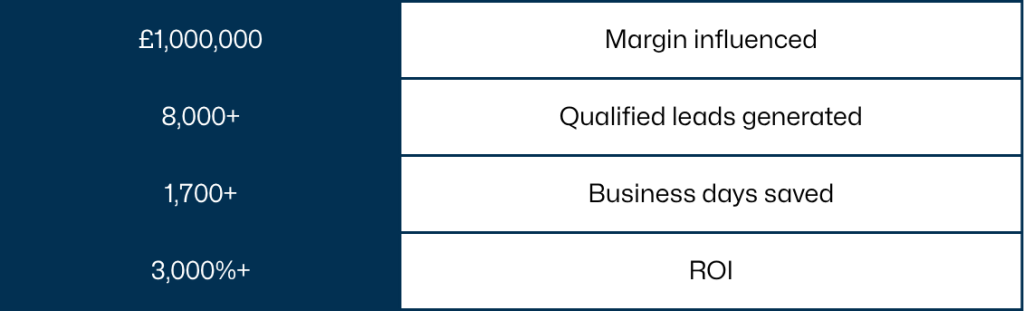
These are not metrics generated by filtering leads more aggressively. They come from engaging more of them — properly, persistently, and in a way that surfaces the buying intent that was already there.
Fixing inbound conversion is a strong start. But the same principles extend across the entire growth of architecture.
The brands that win the next phase of automotive growth will not simply outspend their competitors on lead generation. They will be the ones who convert existing demand more consistently than anyone else.
If you are thinking about how to bridge the gap between inbound interest and retailer-ready opportunity, we would be glad to talk through what that looks like for your brand.